Unstaging War, Confronting Conflict and Peace by Tony Fry
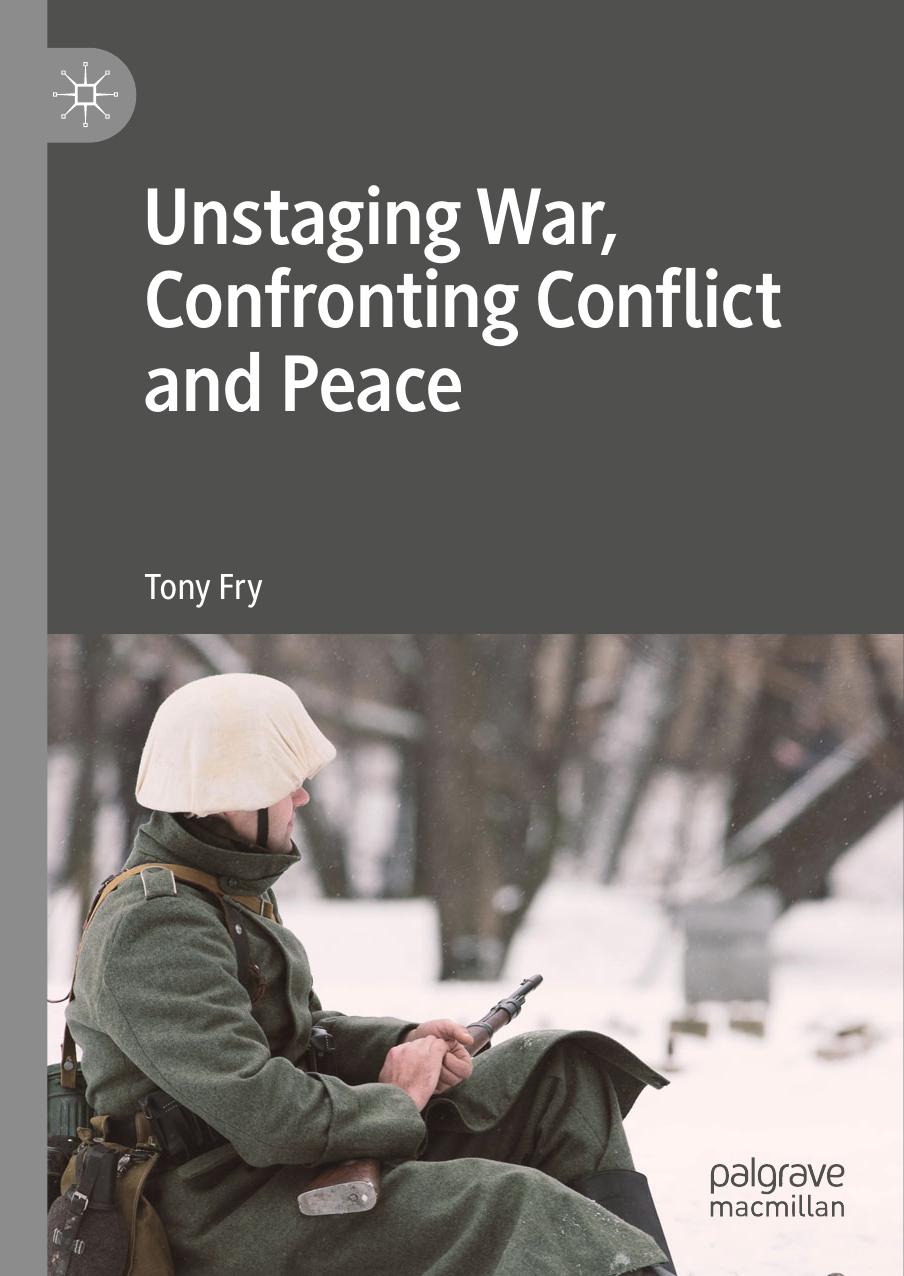
Author:Tony Fry
Language: eng
Format: epub, pdf
ISBN: 9783030247201
Publisher: Springer International Publishing
Climate Change and Conflict
Even from a brief outline it’s clear that climate change impacts pose a huge risk to many nations and to global security in general. There is a widespread assumption that these impacts will arrive in various forms of environmental disasters—flood, fire, drought, extreme weather and so on. But it’s very likely what will first occur will be economic and informational crisis. For example, many coastal cities will experience and economic collapse and population flight when information arrives indicating inundation looks to be certain, which maybe several years before the actual event. In such circumstance information management and post-abandonment planning will have direct consequences on the actions and fate of the population. Where issues of logistics and relocation destinations have been resolved risk is reduced, where it is not its obviously high. Abandoned cities themselves raise issues. For example, their material reuse and recoverable resources can be ‘mined’ in an organised and orderly ways. In many cases these materials could be the means to raise the ground levels and contribute to rebuilding recoverable sections of a city. At the other extreme these cities could become sites of scavenging, chaos and violence.
Currently, climate science holds the dominant position in defining the problem of climate change , but this presents a serious and unbalanced view of the problem. Climate is a much a cultural issues as it is a scientific one (which is not to diminish the scientific perspective). This is because climate has always been, and remains, a dominant feature of our collective historicity and being. What ‘we’ look like, grow, eat, wear, the work we do, how and where we live, how we feel, what we value and don’t value all link to the effects and affects of climate. It alters our bodies, affects our minds and influences our behaviour. Thus over the entire period of hominoid existence climate reactive action has been, as mentioned, a major directive force in how we as a species evolved. It was also a major factor in our species global distribution.
The Anthropocene now represents the age of a hominoid accelerated moment of planetary and climate change . Yet adaptation to climate in the engineered environments of late modern life is under-recognised, reductively instrumentalised, urgent and a crucial imperative to embrace. It begs to be understood as indivisibly a trans-science/culture collaborative and diverse project of transforming modes of earthly habitation and conduct that go well beyond the current technocentric climate action agenda and its restrictive epistemological framework. The actual complexity of the ‘what and how’ of adaptive action, beyond the instrumental, presently goes almost totally unthought.
Likewise, the issue of the relation of climate change to conflict is not gaining substantial and needed exposure in the political and public sphere. However, it is being recognised by a number of organisations working in areas of critical climate concerns—this evidenced by an already large and growing literature. For example Oxfam published a comprehensive literature review in 2010,4 in 2017 the US Department of Defence Centre for
Download
Unstaging War, Confronting Conflict and Peace by Tony Fry.pdf
This site does not store any files on its server. We only index and link to content provided by other sites. Please contact the content providers to delete copyright contents if any and email us, we'll remove relevant links or contents immediately.
| Anthropology | Archaeology |
| Philosophy | Politics & Government |
| Social Sciences | Sociology |
| Women's Studies |
The remains of the day by Kazuo Ishiguro(9016)
Tools of Titans by Timothy Ferriss(8418)
Giovanni's Room by James Baldwin(7363)
The Black Swan by Nassim Nicholas Taleb(7145)
Inner Engineering: A Yogi's Guide to Joy by Sadhguru(6806)
The Way of Zen by Alan W. Watts(6624)
The Power of Now: A Guide to Spiritual Enlightenment by Eckhart Tolle(5803)
Asking the Right Questions: A Guide to Critical Thinking by M. Neil Browne & Stuart M. Keeley(5789)
The Six Wives Of Henry VIII (WOMEN IN HISTORY) by Fraser Antonia(5523)
Astrophysics for People in a Hurry by Neil DeGrasse Tyson(5197)
Housekeeping by Marilynne Robinson(4462)
12 Rules for Life by Jordan B. Peterson(4316)
Ikigai by Héctor García & Francesc Miralles(4286)
Double Down (Diary of a Wimpy Kid Book 11) by Jeff Kinney(4285)
The Ethical Slut by Janet W. Hardy(4271)
Skin in the Game by Nassim Nicholas Taleb(4265)
The Art of Happiness by The Dalai Lama(4138)
Skin in the Game: Hidden Asymmetries in Daily Life by Nassim Nicholas Taleb(4019)
Walking by Henry David Thoreau(3973)
